Meryem Sebti is the founder, publisher and editor-in-chief of DIPTYK, a magazine devoted to contemporary art from Africa and the Arab world.
The Political Imperative
M.S. Your collection has developed around the idea that, for African and Afro-descendant artists, the political is not an option but a necessity. How would you define this ‘political urgency,’ and how does it shape your perspective as a collector?
R.B. The ‘political urgency’ that runs through African and diasporic art is not a posture but a condition. Since the anticolonial struggles, art has often been one of the few spaces in which dissent could be expressed. Later, at the time of independence, art became associated with the tremendous hopes inspired by political freedom.
I grew up in West Africa in the 1980s, and this artistic force was still visible everywhere: in architecture, from the national assembly and presidential buildings in Dakar to the Afro-modernism of the Hôtel Ivoire in Abidjan; and in murals depicting heroic popular uprisings, the promise of Pan-Africanism and the hope of a different world. I did not know the artists’ names, and many of them have since largely disappeared from the pantheon of art history.
When I later returned to Africa as a young economist working for a major international organisation, the murals were still there, as were the same hopes inscribed on the façades of democratic institutions, from Guinea to Rwanda and Nigeria - sometimes, often, overshadowed by the tragic setbacks of civil wars or the legacy of dictatorships.
It became clear that these realities had to be examined without condescension, and with the humility of understanding that history and its excesses repeat themselves everywhere.
Collecting contemporary African art gradually led to another self-evident truth: African artists have never relinquished the necessity of confronting the major social and political challenges of their time. Whatever the period and whatever its specific concerns, their works carry that difficult combination of criticism and the vision of another, better world. What might appear simultaneously pessimistic and naïve in ordinary life becomes essential in the work of an artist.
This also requires humility: the humility of collecting art that carries within it an imperative for life - the imperative to question and to search.
Art and Power: A Long History
M.S. Since independence, the relationship between art and power in Africa has continued to evolve. Which milestones or turning points seem essential to understanding the genealogy of contemporary African art of resistance?
R.B. It is difficult for me to present myself as a specialist in the history of modern and contemporary African art, and many others are far more qualified to discuss it. My own knowledge has developed modestly, through exhibitions and conversations with participants in these artistic scenes.
The major milestones are often political. The art of anticolonial resistance, followed by the art of independence-era aspirations, nourished African modernism: a hybrid movement in which African artists reinterpreted modernist languages - Cubism, Expressionism, abstraction and Surrealism - and brought them into dialogue with their own visual, symbolic and spiritual traditions.
Art schools established during the colonial period, such as the École des Beaux-Arts in Dakar, the Makerere School in Uganda and the Khartoum School of Art, became spaces of negotiation between Western inheritances and the search for distinct artistic identities.
After independence, art was frequently used to construct national narratives. One might think of the public commissions initiated by Léopold Sédar Senghor in Senegal or the major sculptural programmes developed across West Africa.
These modernist movements have been rediscovered through important exhibitions such as Seven Stories about Modern Art in Africa at the Whitechapel Gallery in 1995, The Short Century at MoMA PS1 in 2001, Paris Noir at the Centre Pompidou in 2025 and Nigerian Modernism at Tate Modern in 2025.
Another period began with the controversial exhibition Magiciens de la Terre at the Centre Pompidou in 1989, when African art became truly globalised. This led to the major postcolonial exhibitions of the 1990s and 2000s - Okwui Enwezor’s Documenta 11, Simon Njami’s Africa Remix and others - as well as to the creation of the Dakar Biennale, Dak’Art.
This period marked the recognition of a critical, postcolonial art that could no longer be reduced to Africanism. African art was repositioned within a global cartography of resistance, bringing artists and thinkers from the Global South into dialogue.
It was also a difficult period for Africa, marked by civil wars, economic stagnation, the burden of debt and painful structural adjustment programmes. These circumstances also encouraged artists to return to practices rooted in tradition.
Over the past twenty years, contemporary African art has inherited this dialogue between global modern forms and local traditions, while further politicising questions of colonial memory, migration and diasporic identity. It has moved to the forefront of the international art world, through artists such as El Anatsui, Julie Mehretu and William Kentridge.
Now positioned at the centre of globalised art, African artists are shaping a new form of resistance around political memory, identity, ecology, materiality and Afrofuturist narratives. Their work combines a reclaiming of representation with the role of art as a spokesperson for the major issues of our time.
Our collection is rooted in this movement. Founded in the mid-2010s, it developed in a world in which Africa’s position was changing. These were years of strong growth and emergence, and of a redefinition of global balances, with the Global South carrying greater weight.
This African optimism is reflected in an art that redraws boundaries, reclaims representation and criticises without falling into defeatism. African voices have carried their messages powerfully through exhibitions such as Documenta 13 in 2012, the growing number of African national pavilions at the Venice Biennale, and exhibitions such as Okwui Enwezor’s All the World’s Futures in 2015.
This polyphony of resistance, and the multiplicity of its approaches, is an important lesson guiding the exhibition NOIR MATTERS.
The Artist as a Political Actor
M.S. Can we say that the contemporary African artist has become a political actor in their own right - sometimes activist, sometimes poet - and how does this dual position influence your acquisition choices?
R.B. Perhaps it is reductive to assign the African artist the role of political actor. Certainly, the artist is a ‘producer of discourse,’ as Okwui Enwezor theorised, but artists remain outside the realm of partisan politics - outside what is sometimes called politicking in Africa - and it is precisely this position that preserves their power.
For that reason, the artist seems essential to society, carrying an independent and enduring voice through a multiplicity of forms and representations. NOIR MATTERS seeks precisely to reveal this multiplicity.
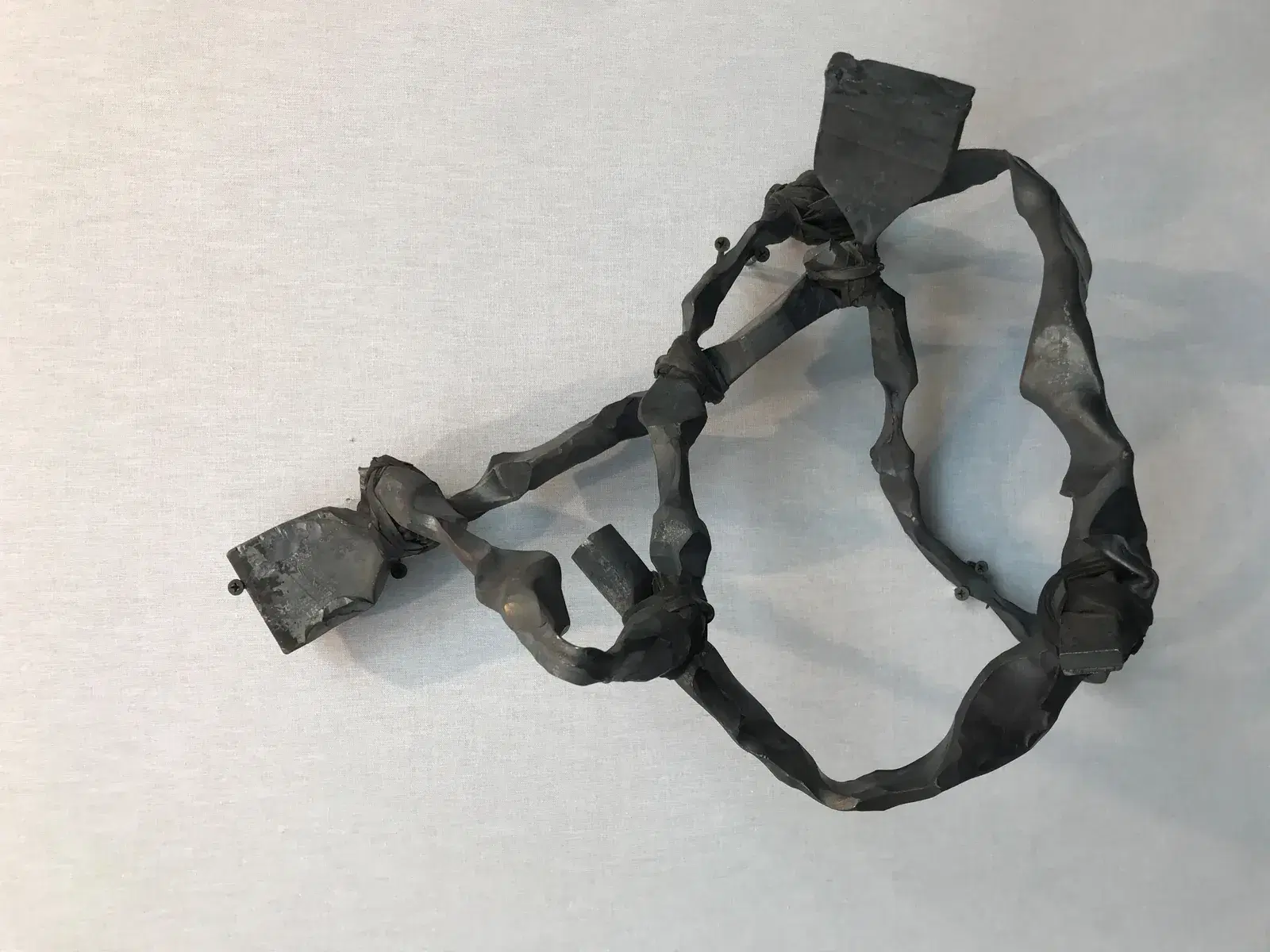
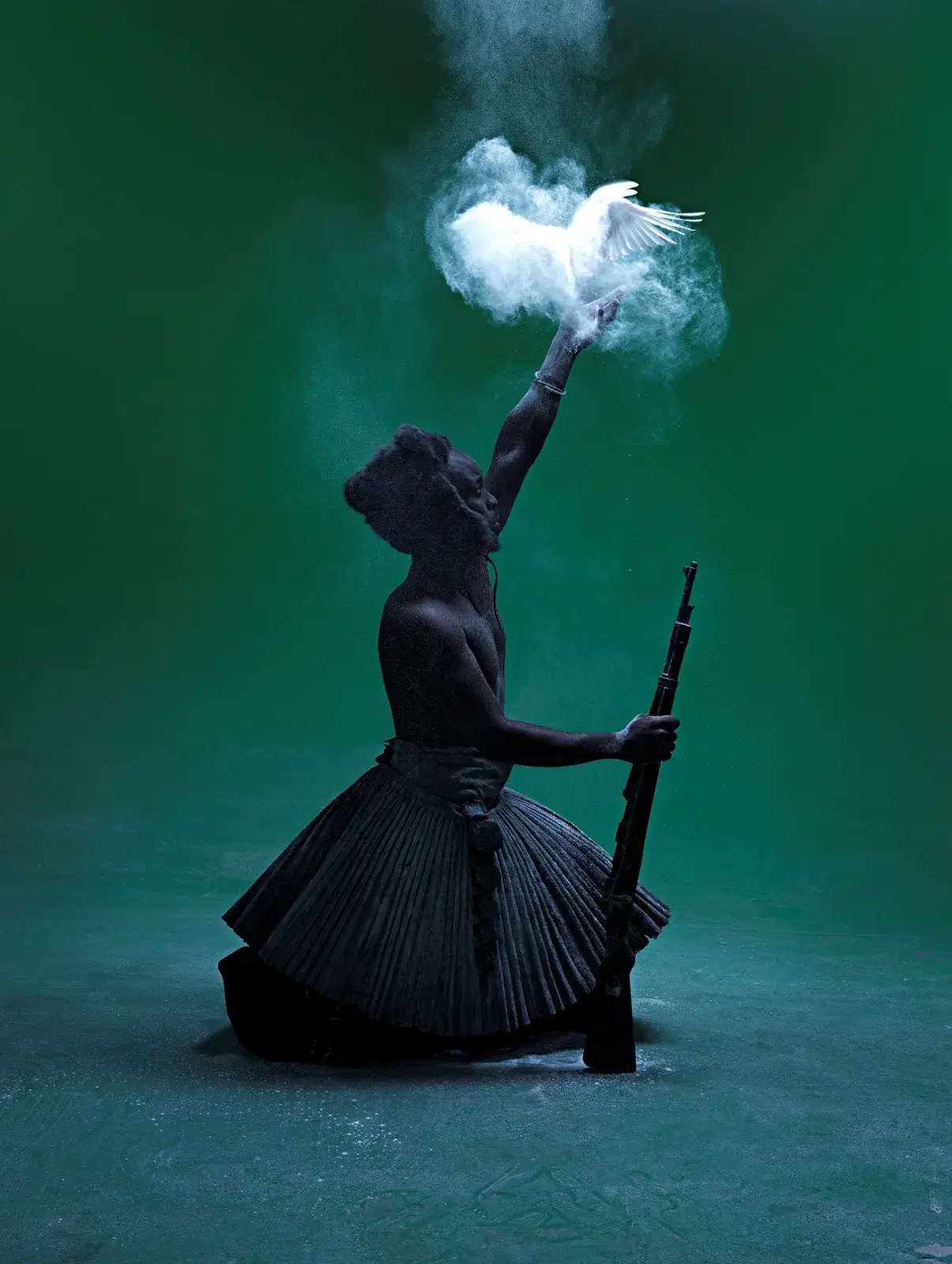
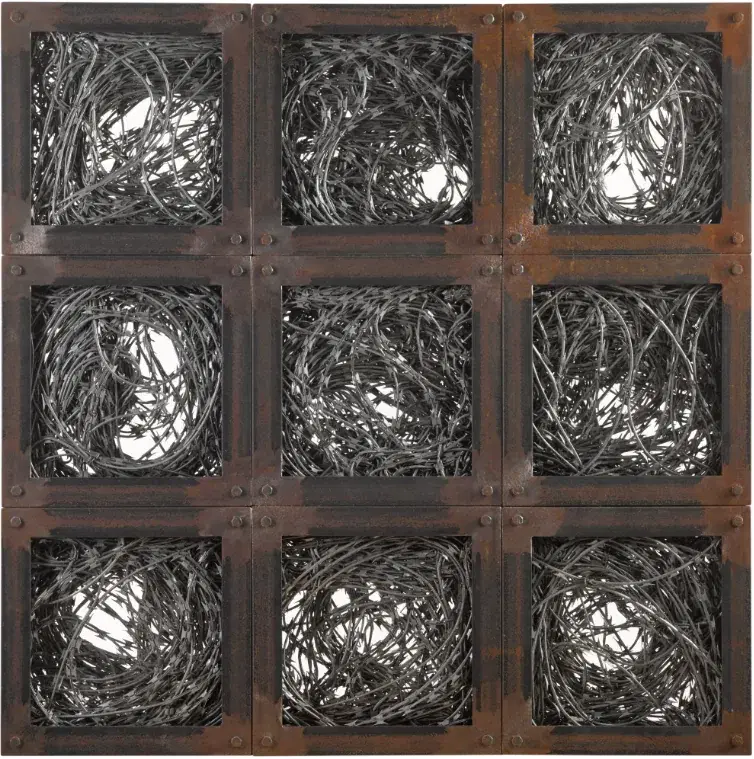
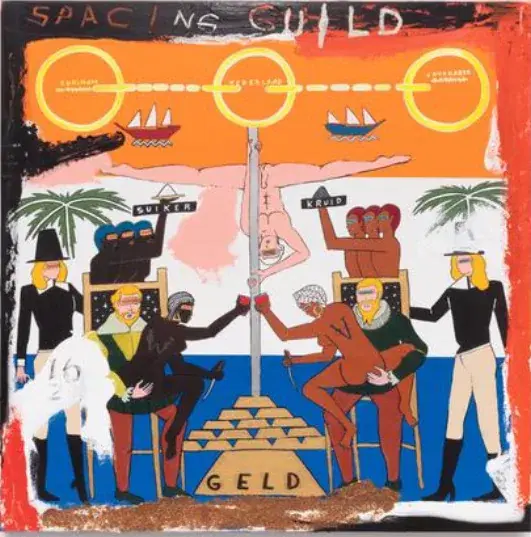
The message is direct and confrontational in the work of Kendell Geers, who encloses apartheid within blocks of metal. It is poetic in the work of Asemahle Ntlonti, who traces the marks left by the passage of time. Kudzanai Chiurai stages postcolonial violence as a theatre of the absurd. Zanele Muholi constructs a living archive of Black queer communities. These gestures are not merely artistic; they are political acts.
This dual dimension - poetic and activist - has become central to our acquisition choices.
Legacies and Reinventions
M.S. The exhibition NOIR MATTERS invokes anticolonial struggles, ancestral cosmologies and queer and feminist activism. How do you think these multiple legacies are articulated today within politically engaged African art?
R.B. Presenting the plurality of forms of political resistance was a curatorial choice that imposed itself very early in the development of NOIR MATTERS.
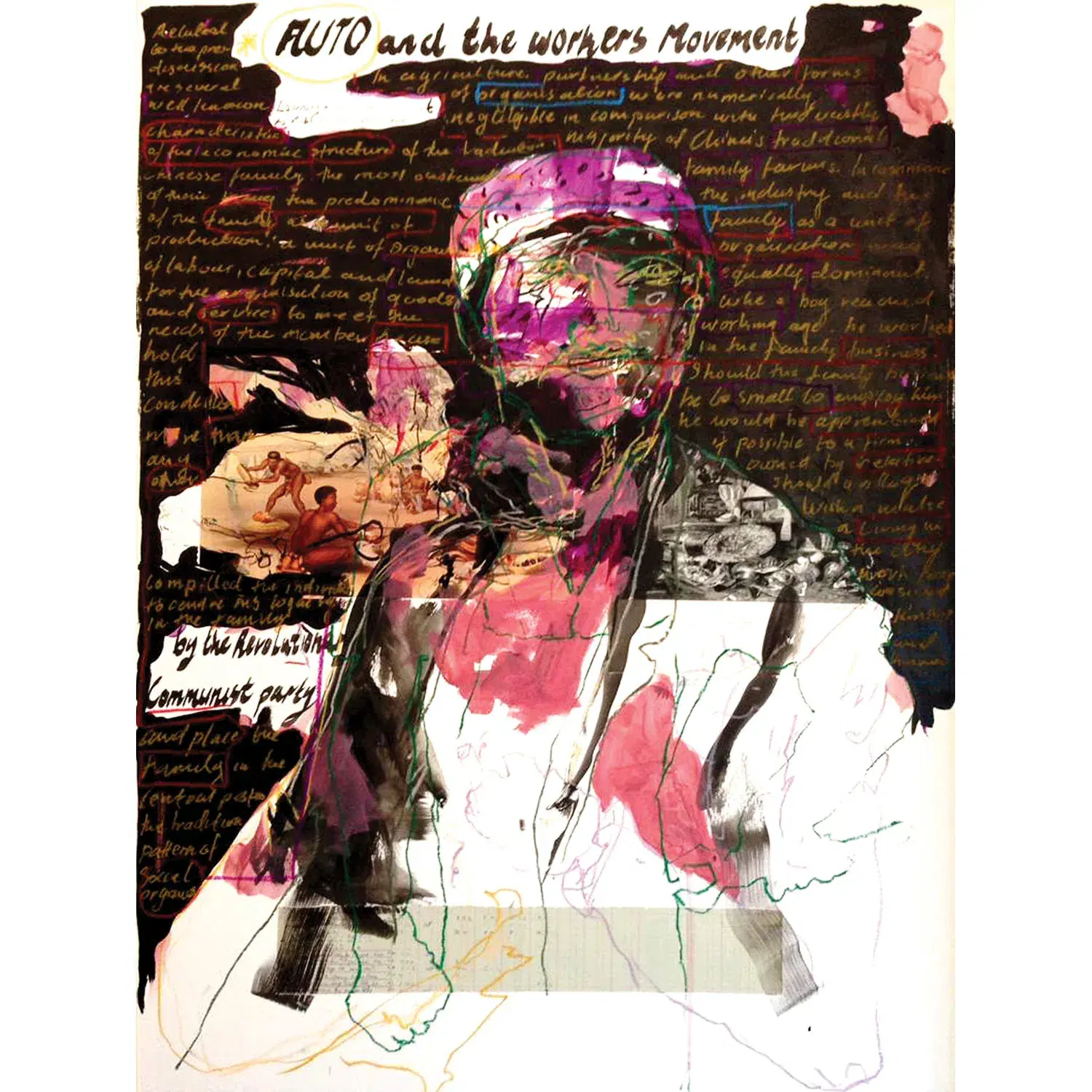
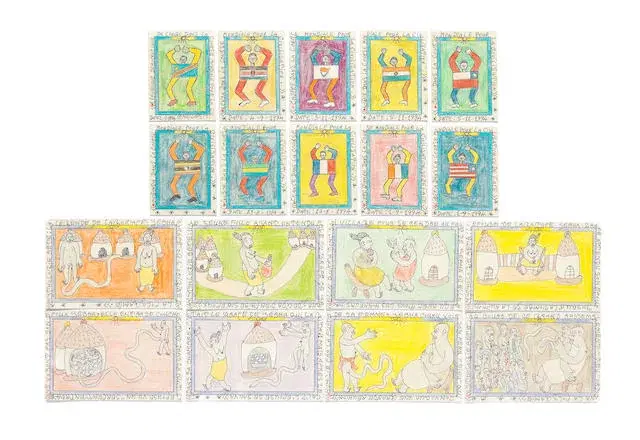
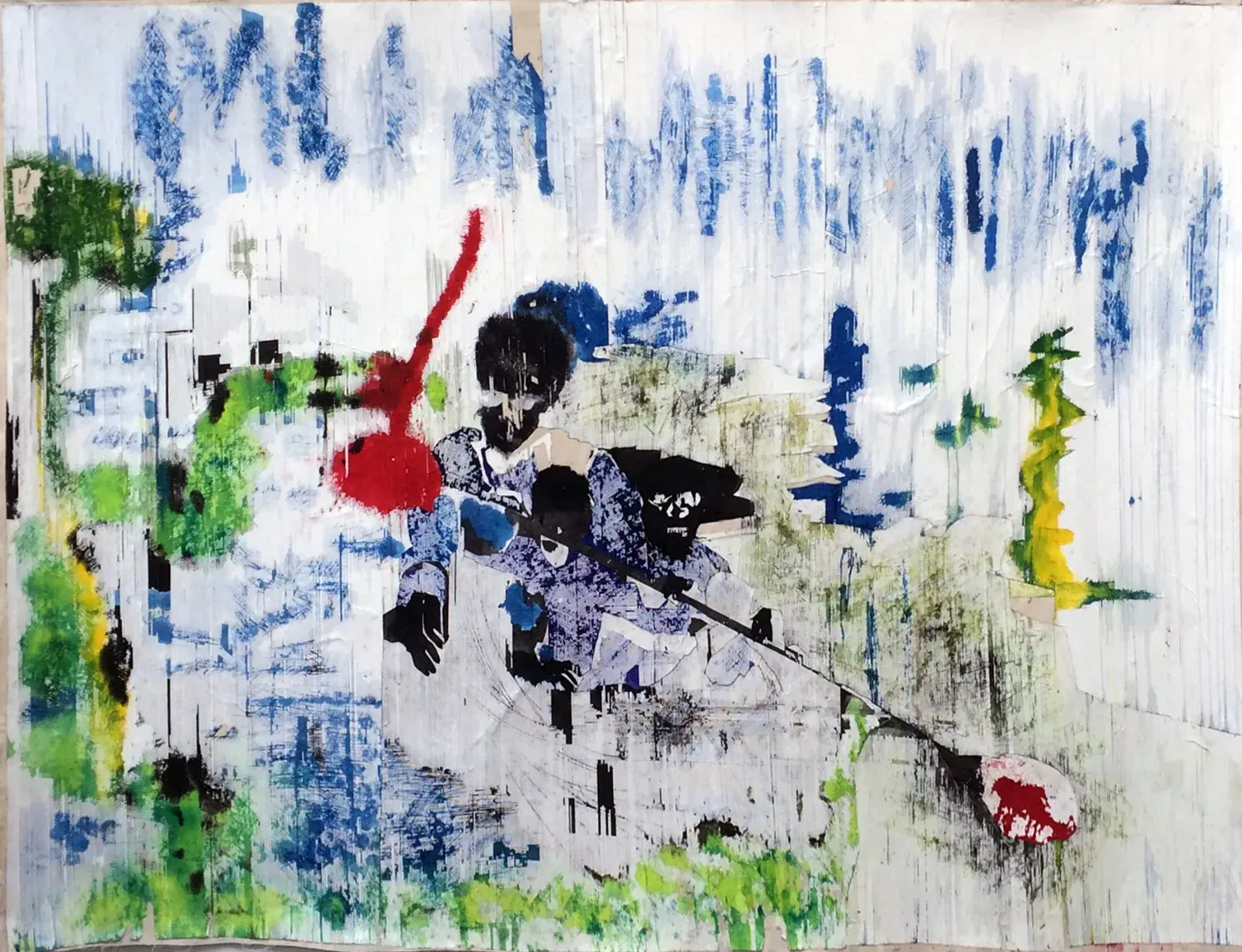
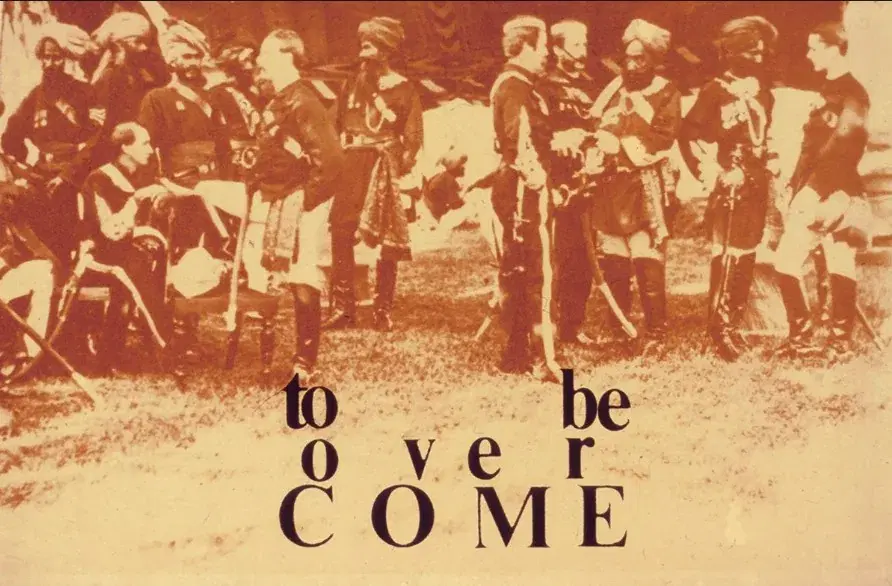
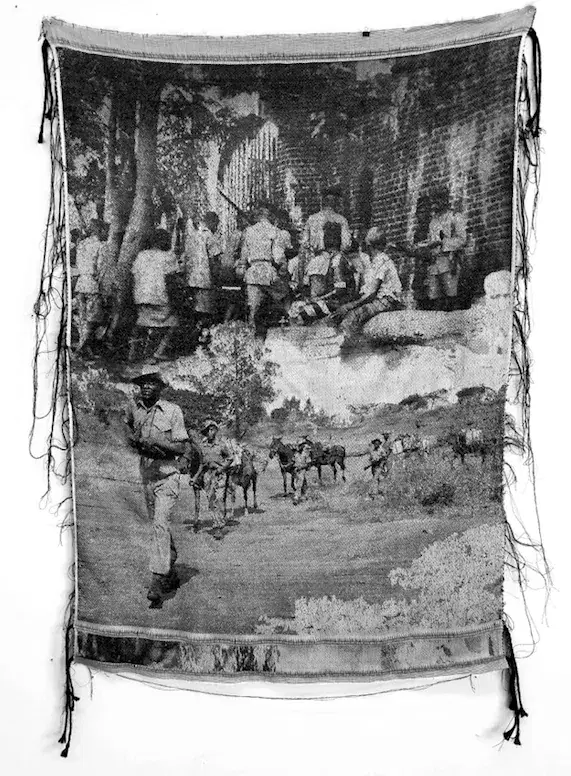
The memory of anticolonial struggles runs through the exhibition: in John Akomfrah’s reinvented archives and Jess Atieno’s tapestries; in the documentation of, and insurrection against, political and social violence in the works of Igshaan Adams and Slimen El Kamel; in the symbolic invocations of Ferdinand Kokou Makouvia and Bronwyn Katz; and in Chada’s rejection of economic and historical dependency.
Behind this multiplicity, rooted in the diversity of African struggles, a universal message emerges. It is through this universal scope, in my view, that the works enter the history of art. Yet the message itself is simple: an injunction to rebel against all forms of oppression and inequality, and to question the political structures that surround us.
These legacies and struggles intersect, as Africa Remix demonstrated as early as 2004-2007 under the curatorship of Simon Njami: contemporary African art cannot be reduced to a single narrative, but must be understood as a constellation of reinventions.
Forms of Resistance
M.S. From Gonçalo Mabunda’s thrones forged from weapons to Zanele Muholi’s luminous portraits, artists choose radically different forms of protest. Can materiality or medium already constitute a political gesture?
R.B. The multiplicity of forms is the exhibition’s second guiding thread. It imposes itself on the collector and, in turn, on the viewer.
African materiality is profoundly social and political. It draws upon a traditional culture of material, and upon forms of ancestral art in which the object becomes a symbol. In its contemporary use, material becomes a vehicle for meaning.
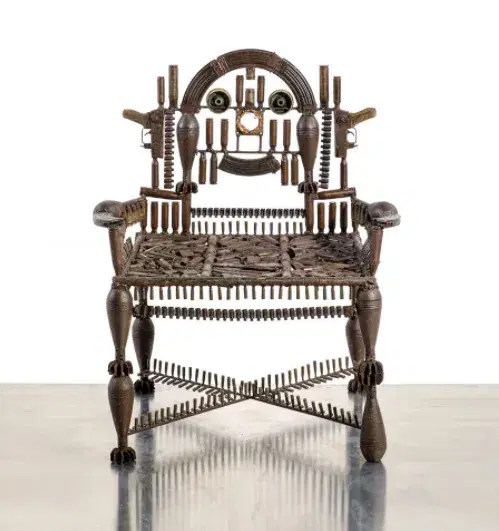
By transforming weapons into thrones, Gonçalo Mabunda questions the foundations of power in a world where its corruption leads to civil war. At the same time, he demonstrates how the remains of war can become visual memory.
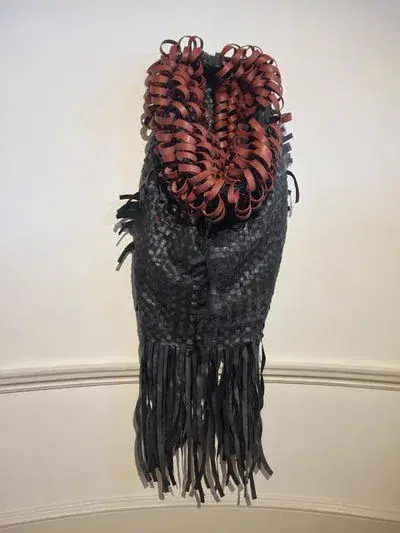
Moffat Takadiwa elevates industrial waste into monumental sculptures, revealing the fractures of the global economy. NOIR MATTERS intensifies this gesture by presenting his work within the solemn setting of the village church.
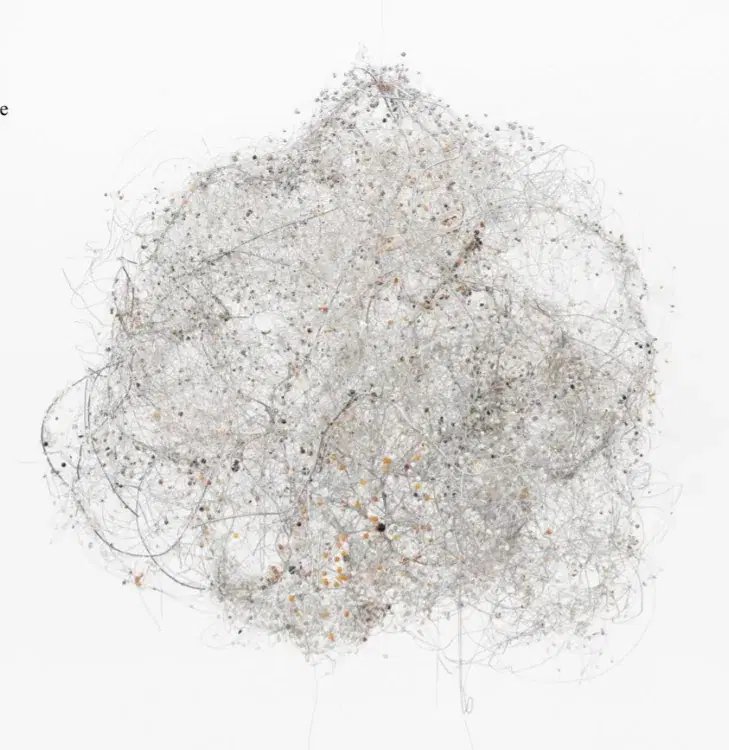
Igshaan Adams embroiders and sculpts installations that become repositories and archives of the hardship experienced in South African townships.
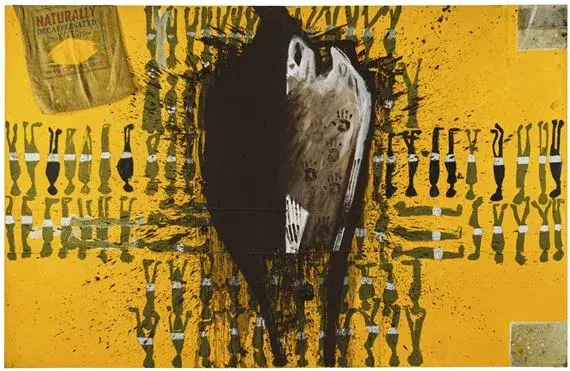
We find a comparable use of material among Afro-descendant artists such as Rashid Johnson, for whom material becomes a genuine symbolic marker. Even in a work on paper such as the one presented in the exhibition, traces of enamel and assemblages of images of masks and palm trees create references that situate his practice within the long history of escape in the African American experience.
By restoring the formal plurality of resistance, NOIR MATTERS does not direct the viewer towards a single political message. Instead, it proposes a methodology, guiding the viewer through an essential process of political questioning. The medium is never neutral. It is always an active participant in resistance.
The Intimate and the Collective
M.S. How does politically engaged art manage to articulate personal wounds and collective memory, poetry and criticism, without being reduced to slogans or political illustration?
R.B. The politically engaged art created by African artists is powerful precisely because it cannot be reduced to a didactic or simplistic message. It articulates the intimate and the collective. Personal narratives connect with global struggles, and beyond this, the particular becomes universal.
In Muholi’s work, the intimate becomes a collective archive. In Amadou Sanogo’s work, village humour becomes political criticism. This tension between poetry and critique is the key: it prevents the work from being reduced to a slogan.
This dimension is extremely important to our family collection, because the works transmit values and offer a methodology of resistance.
Reception and Depoliticisation
M.S. When these works circulate between Africa and the international art world, is their political force amplified or, on the contrary, weakened by the market and institutions? As a collector, how do you avoid the depoliticising effects of appropriation?
R.B. Perhaps somewhat naïvely, I tend to believe that ‘true’ works possess a force that allows them to escape the risk of dilution. Perhaps this is even what distinguishes contemporary African art from other artistic scenes that are more heavily shaped by market-driven movements.
The more speculative waves of recent years are interesting to observe, particularly from a collector’s point of view. Not approaching collecting as investment or speculation, but rather as the construction of a meaningful ensemble, provides valuable distance.
Around ten years ago, when I began building our collection, the African art scene was less established and more fragmented, although many artists were already producing large tapestries in the tradition of El Anatsui. Black figuration subsequently became dominant, and behind the major masters there emerged a large group of followers whose work was often mediocre.
Over the past few years, another reconfiguration has been taking place: a more abstract art, nourished by traditional forms of knowledge, craftsmanship and the use of material. Within these movements, followers produce bland work and are carried away by the market. But the true artists, those whose work is sustained by a permanent search, do not seem to me to face the same risk.
I am thinking of two exhibitions I saw in New York last spring: Amy Sherald’s American Sublime, which moves beyond figuration to reintegrate Black society into the heart of American symbols, and Rashid Johnson’s A Poem for Deep Thinkers, which establishes the foundations of a form of resistance rooted in the memory of the Black experience in the United States. Despite the trends surrounding these artists, and despite the crowds at both exhibitions, it was impossible to escape the force of their work. One can also think of major exhibitions such as Documenta 11, which amplified the political charge of the works presented.
As a collector, I believe the key remains sincerity: acquiring works that carry meaning and engage in dialogue with a personal vision, whatever that vision may be, while trying not to be overly influenced by trends - although it is difficult to escape them entirely.
Political engagement became an important dimension of my choices very early on. It is deeply satisfying to see that the works speak to me as strongly today as they did when I acquired them. Looking back at the collection, I have very few regrets and very few works that seem out of place.
Personally, I prefer acquiring major works by emerging artists rather than secondary works by highly established artists. I have found that these works stand the test of time and do not become ‘depoliticised.’ As a collector, my role is to create contexts - exhibitions, writings and conversations - that preserve the political force of the works and prevent their reduction to purely aesthetic objects. I hope that NOIR MATTERS succeeds in doing this.
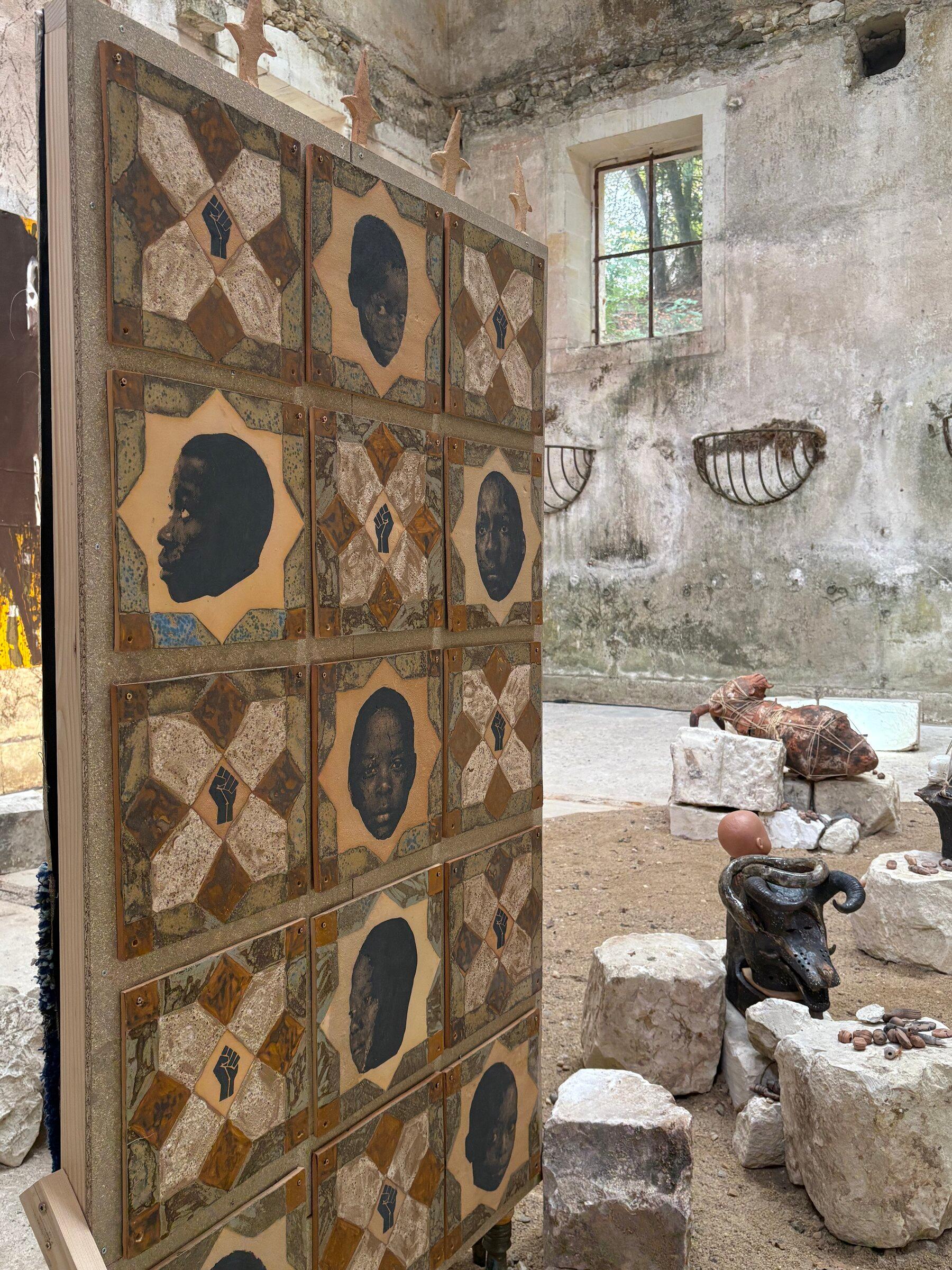
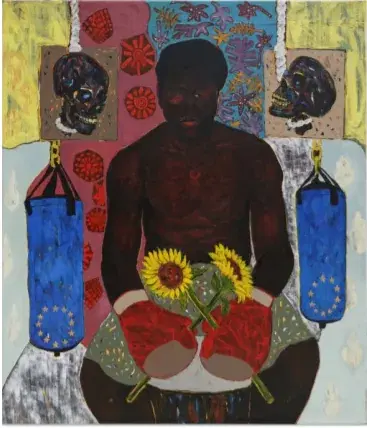
The contrast created by the heritage sites occupied by the exhibition is striking. Moffat Takadiwa’s monumental work in the village church is a powerful gesture. At the entrance to the stables, the works of Igshaan Adams, Asemahle Ntlonti, Ferdinand Kokou Makouvia, Mohau Modisakeng and Bronwyn Katz enter into dialogue with singular force, creating a concentrated space of confrontation and emotion. The remarkable installation by the young artist Chada, presented under the aegis of the great Ouattara Watts, constitutes another important milestone.
Collecting as an Ethical Gesture?
M.S. Can one ‘support’ a struggle by collecting the work that embodies it? Conversely, is there a risk that a voice of protest will be transformed into a market object? How do you reconcile aesthetic passion with ethical responsibility?
R.B. Collecting is an ambiguous act. By its very nature, a work is removed from the public sphere and brought into a private space, introducing a somewhat selfish dimension, despite the financial contribution that supports the artist and the surrounding ecosystem.
Collectors like to say that they ‘collect with a purpose,’ and there is certainly some truth in this well-worn expression. Collecting also means becoming a bearer of meaning: constructing a coherent ensemble in which works enter into dialogue, confront one another and become stronger. This is what distinguishes a collector, however modest, from a mere ‘buyer’ of artworks.
The Blavy Collection is grounded in a logic of transmission, and in values that I hope will guide my children. It becomes a critical space, not merely a patrimonial one.
Being able to organise an exhibition such as NOIR MATTERS is a great privilege. I am deeply grateful to the Centre Pompidou, the Centre-Val de Loire Region and the municipality of Saint-Épain for supporting this project alongside me, because an exhibition creates the possibility of another dialogue: one between the works and the public.
Taking art beyond museum walls and bringing it into contact with a different audience is an immensely enriching experience, made even more powerful by the strength of the works the artists have created.
A Cartography of Resistance
M.S. This exhibition constructs a ‘cartography of resistance’ spanning generations, countries and diasporas. What does this networked - almost geopolitical - approach allow you to say about contemporary African dynamics, which you know so well through your professional work and personal culture?
R.B. Speaking of African art is already a formidable challenge. Speaking of African art and political resistance is a double challenge: there are fifty-four African countries, as well as numerous diasporas and geographies, which must not be conflated.
The diversity of subjects guides both the exhibition and the viewer in a shared direction: the injunction to political resistance. NOIR MATTERS proposes a cartography that crosses geographies and generations, showing how forms of resistance circulate from one continent to another and from one period to another.
It says something about contemporary Africa: about its strengths and fractures, its circulation of ideas and people, but also its ability to propose alternative narratives to globalisation. I see these artistic dynamics as a metaphor for the geopolitical transformations I observe in my daily work: the search for a third way, rooted in the continent’s specificities and resources while also being articulated within a globalised world.
Art and politics intersect, both marked by the emergence of new narratives around ‘Africa Rising,’ narratives that offer a counterpoint to realities that continue to make daily life difficult.
Debt relief and the advent of strong growth during the 2000s began to create new maps and alliances, including initiatives such as NEPAD and the development of African responses to development challenges. At the same time, vigilance remained essential in the face of demographic pressure and urbanisation, exposure to external shocks, and the need to benefit from globalisation without suffering its adverse consequences. These public-policy challenges intersect with artistic discourse.
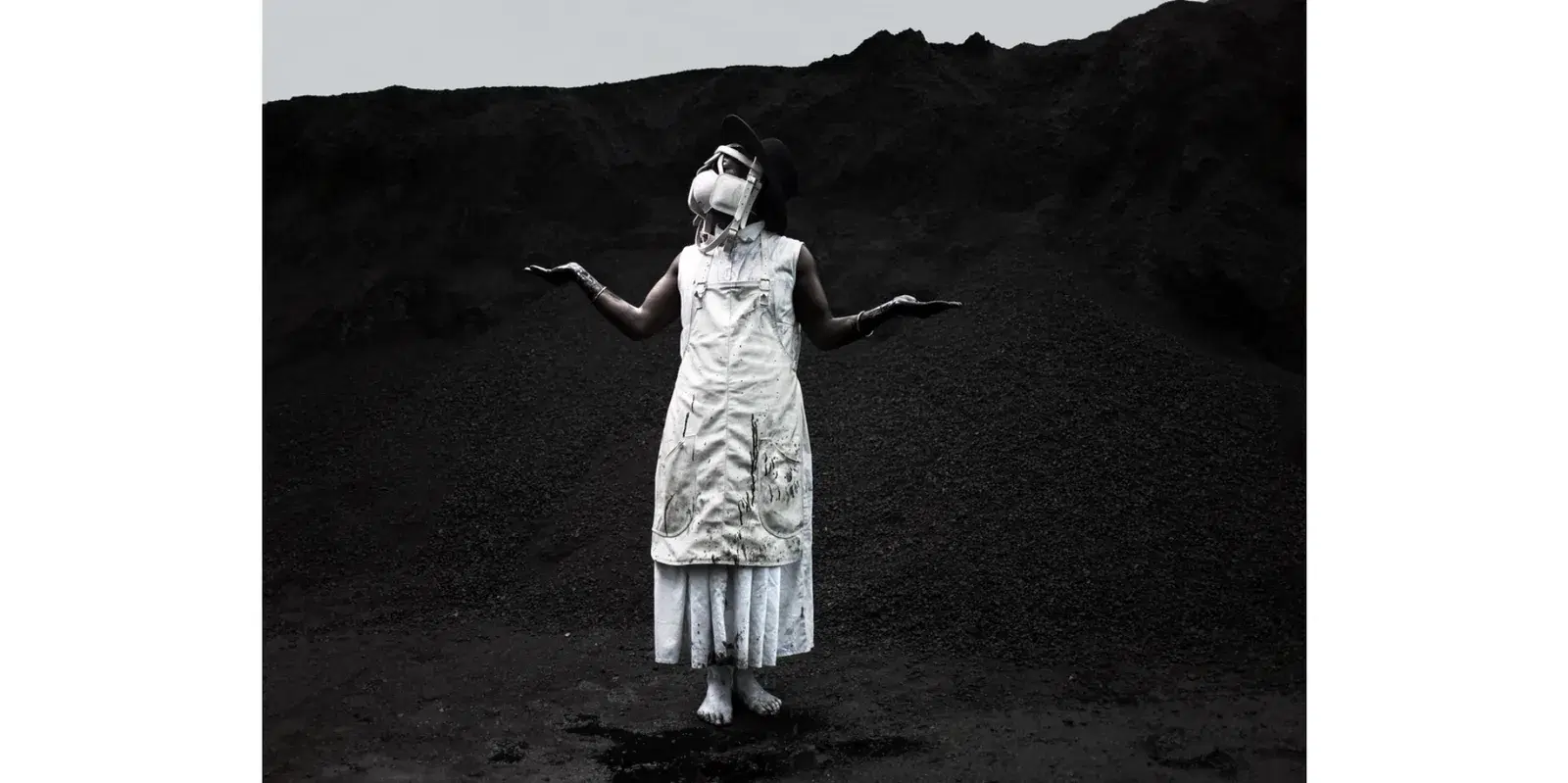
We encounter them in Gareth Nyandoro’s representations of social life; in Patrick Bongoy and Moffat Takadiwa’s criticism of a polluting modernity; and in Mohau Modisakeng’s questioning of the predatory exploitation of African resources. These works serve as powerful reminders of the human realities behind the major issues addressed in our daily work.
Futures of Insurrection
M.S. Today’s artists are exploring new areas of protest: ecology, gender, diaspora, technology and others. From your perspective as someone familiar with international dynamics, what do you think the future territories of insurrection will be, and how will the collection continue to support them?
R.B. Artists, increasingly skilled at sounding the alarm, have already embraced these new terrains of struggle. They are captured throughout NOIR MATTERS, from ecology and gender to migration and technological change.
What is changing today is the urgency and the imperative of insurrection. The acceleration of these challenges is undeniable. Risks and uncertainties are multiplying as maps are redrawn and balances of power shift. Economically, rising inequality and protectionist reflexes evoke the spectre of the 1930s. Public authorities are exhausted and overwhelmed by the rise of extremism.
It was while developing the ideas behind NOIR MATTERS that this urgency of questioning became clear to me. More than ever, it is the guiding thread of the Blavy Collection. I hope we will continue to support the voices of these artists, preserve their radicalism and offer them spaces in which their work can resonate.